Pad Thai is the signature
dish of Thai cuisine. My friends at the Thai Gardens
in Milpitas California taught me how to cook this fabulous dish. This
recipe is chili, tamarind, cilantro, peanuts, rice stick noodles with chicken, shrimp and fried
tofu, Thai style. This one is a ten!
When my friends of the Thai Gardens
first started out, they had a postage sized shop on the corner in a large
shopping center. Mom and dad took turns cooking. My friend, Rory Babb introduced me to Thai. He had
lived in country for four years while serving in the Air Force. He ordered for
us in Thai and we always got exceptional friendly service. When he ordered for
me he would say “Pad Thai pet pet mac, mac” and the dish would arrive fragrant
and incredible spicy. It was hotter, in fact, than anything I had ever eaten
but was so delicious that I finished every bite. Fifteen minutes later, the
heat has dissipated completely. They did not speak English and when they saw me
show up alone, they would say “pet pet mac, mac” smile and ask me where Rory
was. Achieving the American dream, their success lead to the launch of a full
scale restaurant, then two restaurants. By now, I was welcome in the kitchen,
where their Americanized son would translate ingredients into English. I first started out, the easiest place to get the
ingredients is from the restaurant directly. Now, knowing my way around Asian markets, I can find most everything needed. The one exception is tamarind
paste, which I always have on hand in 4 inch bricks cakes. The Thai Gardens
original recipe used a Thai tamarind drink concentrate. Just for fun, once I used fresh tamarinds but that is more work.
If this is the first time you
make Pad Thai, read the whole recipe first. There is nothing hard about it but
there are many steps and quite a significant amount of preparation work. To use
the French term, all should be “Mise en place”. You need to organize and
arranging the ingredients and equipment that is required ahead of time. If not
using fresh noodles, then start the noodles right away. Put the mung bean
sprouts on ice water. Make the Ajad Thai
Cucumber Garnish ahead of time. Prepare garnish plates.
Garnish (Per Person)
(I prepare all the plates ½
hour ahead, cover with wrap, and place in cool spot in kitchen or back in the fridge.)
1/2
cup mung bean sprouts per person, soak in ice water, pat dry
1/2
cup finely julienne Napa Cabbage per person (I use the white stalk portions
only)
2-4
Slices of cucumber, per person
2-3
tablespoons finely chopped unsalted roasted peanuts3
2
Wedges of lime
1 Orange slice
Ajad
Thai Cucumbers and Thai Chilies Garnish (See recipe below)
Banh pho1 - Thai
Rice Noodles
If using dried “Rice stick
noodles” soak noodles in a pot of warm water until are just firm, about 30-40
minutes. To hasten the process, pour in boiling water to raise the temperature
to about the temperature of a hot bath (100 F). Taste the noodles periodically
and remove to a strainer when they are still al dente, completely limp but not
mushy. I usually use Chantaboon Rice Stick Noodle1, Size: M, 14 ounce pack (3~4 persons) or the equivalent. These are also
available fresh from the Asian Markets.
1/4 Cup bean sprouts
Topping
2 green onions, julienned
3-4 Ounces of diced Chicken Thigh meat per person (some chopped fine, some course)
6~8 Peeled tiger prawns per person
1 Clove crushed garlic per person
1/3-
1/2 Cup firm tofu diced (cut in 1/8 by 1/8 thick pieces)
1 Tablespoons rice wine or Marin4
1
Teaspoon of fish sauce (Golden Boy or Tiparos)
1
1/2 to 2 Tablespoons sweet Paprika
1 Level tablespoons MSG
1
to 1 1/2 tablespoons Tamarind Sauce (see notes)
Crushed
red pepper flakes to taste. (Use 1 teaspoon to start. I use 2 tablespoons in
mine.)
Chopped
cilantro
1
tablespoons of sugar (some places use orange honey)
Peanut
Oil
Salt
- as required
Advanced Preparation:
Take a large brick of extra
firm fried tofu. Cut away exterior surfaces and discard. Cut it into 1/8 layers
and cut into stripes 1/4 wide and cross cut 1/4 inch long. Preheat frying pan
with three tablespoons of peanut oil. Bring oil to high heat, fry
tofu until firm and it has taken on some color. (7-12 minutes) Set to drain on
paper towels. Prepare medium wide (1/16th~3/32nds inch)
rice noodles - May be done hours ahead and refrigerated. (The noodles will take
on the flavor of whatever they are cook with the hence rice noodle is superior
for this purpose). There are so many ingredients, it may be a good idea to load
up cups or small dishes with the: sugar, garlic, rice wine, tamarind sauce, red
pepper, salt, fish sauce, paprika, MSG. Prepare the peanuts. (Take inventory
against the recipe.) I have found that I inadvertently have left one or more
ingredients out until I started doing this in a more methodical way.
In a very hot wok, add peanut
oil, and when it smokes, quickly cook the chicken. Repeat the process until all
meat is cooked. Set aside. This step may be done ahead
Individual Preparation of Each Batch of
Noodles
Individually prepare each
portion. In a very hot wok, add peanut oil, and, when it smokes, quickly cook
the shrimp, garlic, and add in the chicken. Then add paprika, msg, tamarind
sauce, crushed red pepper, sugar or some honey for sweetness. Add fried tofu.
Add garlic, rice wine and a few handfuls of noodles. Add in green onions and bean
sprouts. Quickly heat. Add chopped cilantro toss and turn out on a plate, top
noodles with a pile of chopped peanuts, accompanied noodles with bean sprouts,
very fine julienned Napa
cabbage, and sliced cucumbers garnish. Serve with lime wedges and a few slices
of orange.
The bright red coloring of
this dish derives from the ample amount of paprika. The choice of this sweet
paprika is one without a lot of flavor of its own less it over power the plate
due to the quantity in which it is used.
Notes:
1.
Tamarind Sauce- is a critical ingredient in many
Thai foods, and will be found in many steak sauces including mine. If using a package
of tamarind paste, combine with hot orange juice and blend with a spoon. Sieve
the sauce to remove any hard or stringy bits.
When fully ripe, the shells are brittle and easily broken. The pulp
dehydrates to a sticky paste enclosed by a few coarse stands of fiber. The pods
may contain from 1 to 12 large, flat, glossy brown seeds embedded in the brown
edible pulp. If using fresh pods, shell pods like a peanut, pull off fiber
stems along fruited seed pods and place in orange juice over a slow simmer to
soften. When softened, cool, then rub paste off seeds, Discard seeds. Sieve and
blend until smooth. Alternatively, you can scrape seeds with fingernail to
remove raisin colored paste. Combine with orange juice, If making a large
batch, and storing is desired, use lime juice and orange juice. Sieve the sauce
to remove and hard parts. Store the sauce in refrigerator until ready to use.
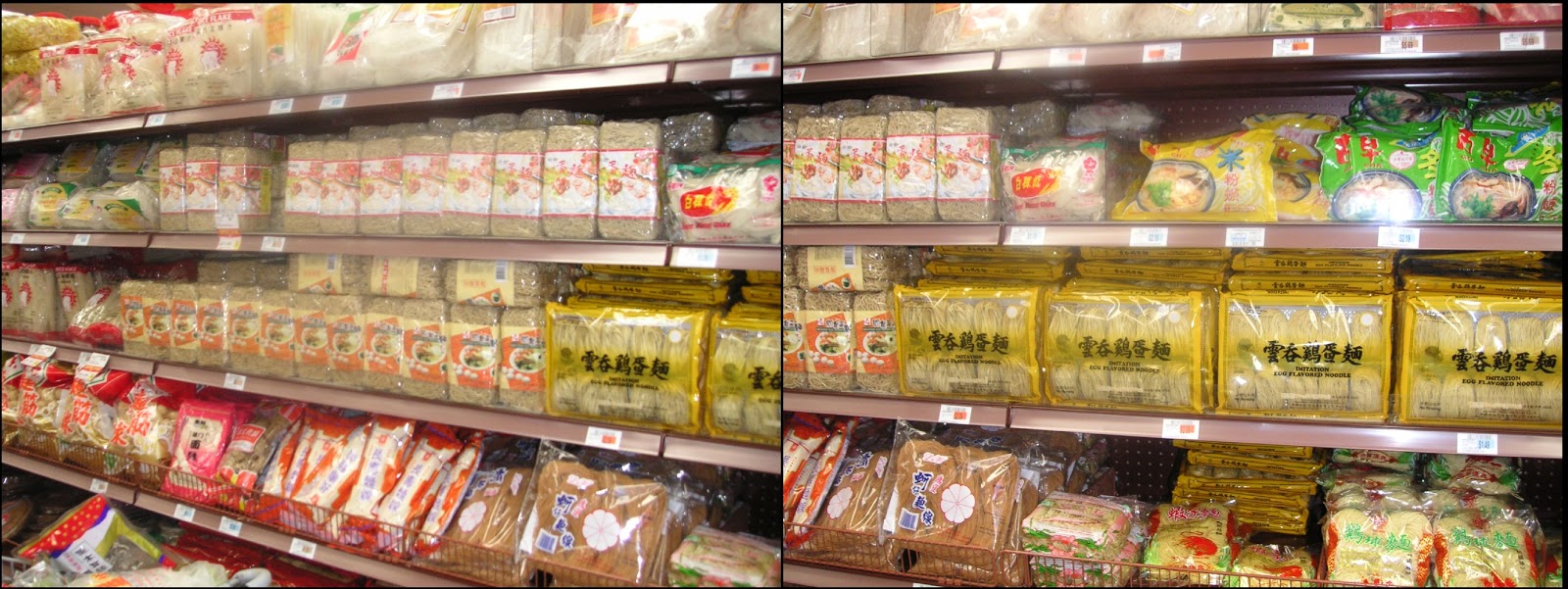
- Import foods, on line, shows a picture of the Bahn
Pho package in case you get lost in the sea of noodles your oriental
market shelves. See http://importfood.com/nogl4001.html
- Fish sauce is the single, most important
flavoring ingredient in Thai cooking and is available in premium and
standard editions - see http://importfood.com/gourmet_fish_sauce.html
for premium varieties. The common brand for this is the Tiparos brand. All
of these contain a bit of sugar and salt and are made from anchovies.
- Unless you chopped the roasted peanut by hand
with a knife, you may get them too fine. I use both 1/3rd
salted and 2/3rds unsalted peanuts, place them in a plastic zip
lock bag and roll over them slowly with a wooden rolling pin. I then sieve
the results. The fine powder falls through the sieve so it may be
discarded.
- Marin is Japanese sweet cooking wine. Since it is
effective in masking the smell of fish, Mirin is often used for cooking
seafood. The highest quality Mirin, referred to as 'Ajino-haha' in Japan
is made from rice. Well-known Japanese brands for Mirin are Takara and
Mitsukan, and the Aji-Mirin is also marketed by Kikkoman and is found on
most supermarket shelves.
- Calamansi juice which is Phillipine lime, may be added to this disk as well as chopped Kaffir Lime leaves to give increased flavor to the dish.
- When making your own tamarind using the fresh pods, I use orange juice to loosing the fruit.
- Notes on Noodles:

You can buy noodles fresh or dry, gluten flour, rice, or even buckwheat in
large diameters, flat, vermicelli or round. The noodle isle at the Asian market
I go to is 40 yards long - these are just the dry ones! If going
“dry” not fresh, adjust cooking time according to package directions or cook
ahead of time in water then drain and rinse in cold water when the noodles are
“al dente” or a little under done. Wet your fingers with some oil and wipe the cooked noodles to prevent sticking. Fresh is much easier and less work.
Banh pho – Rice Sticks - Pad Thai Flat Shape Noodles
Ajad Thai
Cucumber Garnish
Ajad Thai cucumber garnish is often served with Pad
Thai and each guest should have their own serving.
1/3 cup cold water
1/3 cup white vinegar
¼ cup sugar
Salt to
taste
1 peeled English cucumber, raked lengthwise with a fork, cored, then sliced
thinly
4 shallots or red onion sliced
3-4 Thai Green and Red chili peppers, thinly sliced
1
tablespoon fish sauce
Combine
the water, vinegar, sugar and salt to taste. The
water should be sweet, a little sour, and just salty enough to balance the
sweet sour. Soak cucumber and onions in a small bowl and refrigerate
overnight. When ready to serve, in a small soy-sauce bowl, add fish sauce and a little water. Add sliced Thai Green and
Red chili peppers per person. Place bowl on a slightly larger plate garnished
with sweet and sour onions and cucumber slices drained.